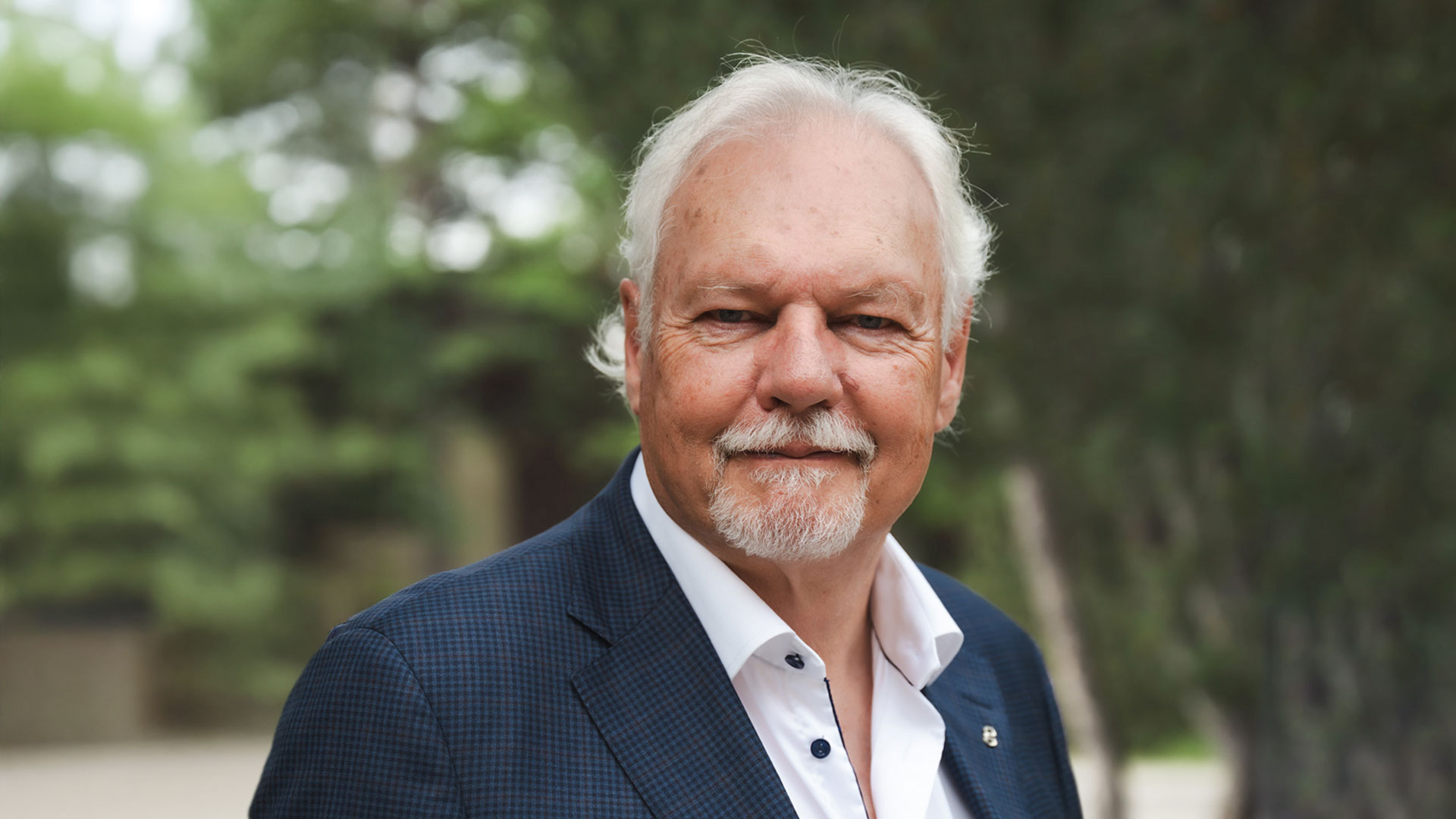
On November 7, 2026, the Canadian Agricultural Hall of Fame celebrated five new inductees, including Genome Alberta’s President and CEO, Dr. David Bailey. This honour recognizes his more than 40 years of contributions to agricultural research, food safety and the application of genomics in Canadian agriculture.
David’s interest in genetics began on a beef farm near Lennoxville, Québec, where he grew up working with cattle and learning about breeding. He earned a PhD in genetics and animal breeding at the University of Alberta before building a career with Agriculture and Agri-Food Canada (AAFC). There, he led beef cattle breeding research and later held senior research and food safety leadership roles across the country.
During Canada’s response to bovine spongiform encephalopathy (BSE), a fatal disease of cattle commonly known as mad cow, he helped establish PrioNet Canada, bringing scientists together to study prion diseases affecting animal health, public safety and agricultural trade. The network went on to develop new prion-detection technologies and risk-management tools that informed public policy and supported efforts to rebuild international confidence in Canadian beef.
Since becoming Genome Alberta’s President and CEO in 2006, David has helped advance research and innovation partnerships that bring genomic technologies into practical use. Under his leadership, Genome Alberta has built a $207M agriculture and agri-food research portfolio and over 60 sector partnerships, supporting advances such as genomic breeding tools adopted by the dairy industry that improve feed efficiency.
Reflecting on his career during a recent RealAg Radio interview, David emphasized the importance of collaboration in advancing agricultural research and innovation.
“Wherever I’ve gone, I’ve had great teams of people to work with … none of this is me alone,” he shared.
His contributions also extend to the next generation, including Genome Alberta’s support for the 4-H carcass competition that helps young people understand the connections between livestock genetics and production.
David’s induction into the Canadian Agricultural Hall of Fame is a fitting recognition of a career dedicated to turning scientific discovery into meaningful advances for Canadian agriculture. His legacy reflects not only the impact of research and innovation, but also the power of collaboration to strengthen the sector and inspire the next generation.
Additional resource: